
Bon Voyage: Plan Your Perfect 5-Day Itinerary
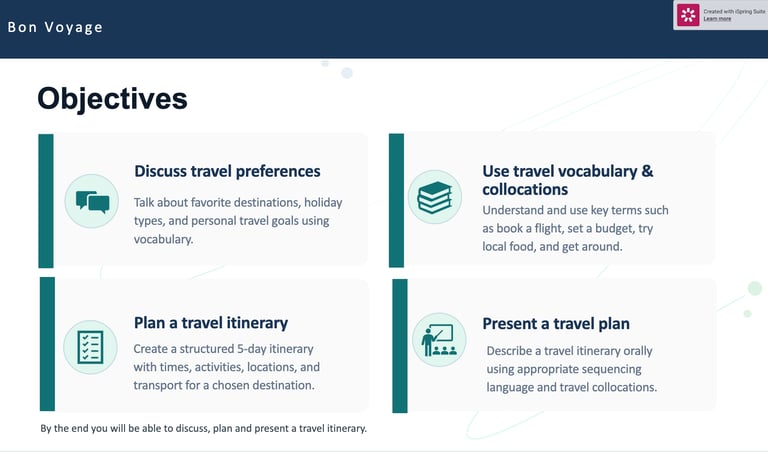
Bon Voyage is a task-based ESL lesson designed for B1/B2 young adult and teen learners. Built in PowerPoint and iSpring Suite 11, it guides learners from a warm-up discussion through vocabulary input, collocations practice, and a travel trivia quiz, before culminating in a real communicative task: planning and presenting a complete 5-day travel itinerary in English. The lesson was originally developed for my Teachers Pay Teachers store and later refined for professional review.
The Challenge
Intermediate learners often know individual words but struggle to produce natural, fluent English in open-ended tasks. This lesson was designed to close that gap by moving learners through a carefully scaffolded sequence toward a final task that required genuine decision-making and spoken output.
The Solution
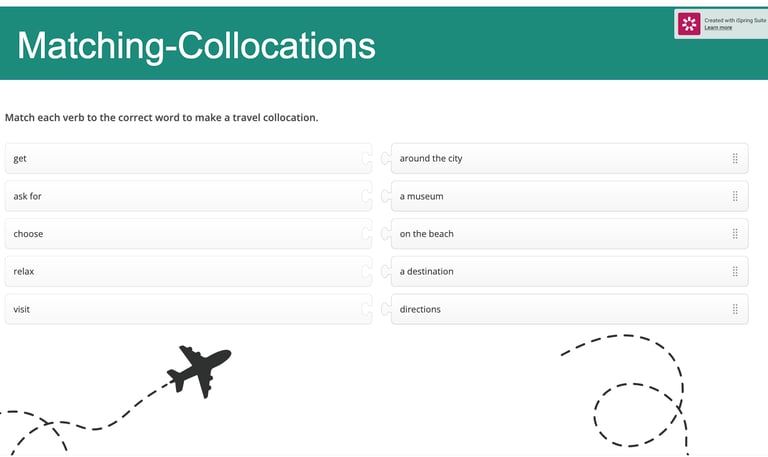
The lesson follows a PPP structure within a Task-Based Learning framework. A dedicated collocations stage teaches learners how travel words work together in natural English — book a flight rather than buy a flight, try local food rather than eat local food — before asking them to use those phrases productively. Each stage builds directly on the last, reducing scaffolding progressively so learners arrive at the final task with the language and confidence they need.
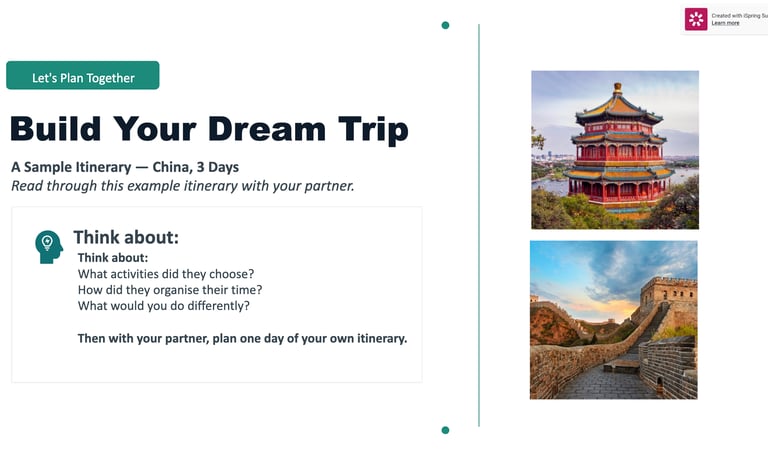

What the Lesson Includes
Guided pair discussion with sentence starters and modelled examples
Vocabulary matching activity in printable and interactive formats
Three collocations practice activities plus a gap-fill exercise
14-question travel trivia quiz
Worked model itinerary before learners build their own
5-day itinerary planning task with downloadable template and checklist
Guided presentation with sentence frames and a 5-criterion speaking rubric
Fast finisher extensions including a digital travel poster task
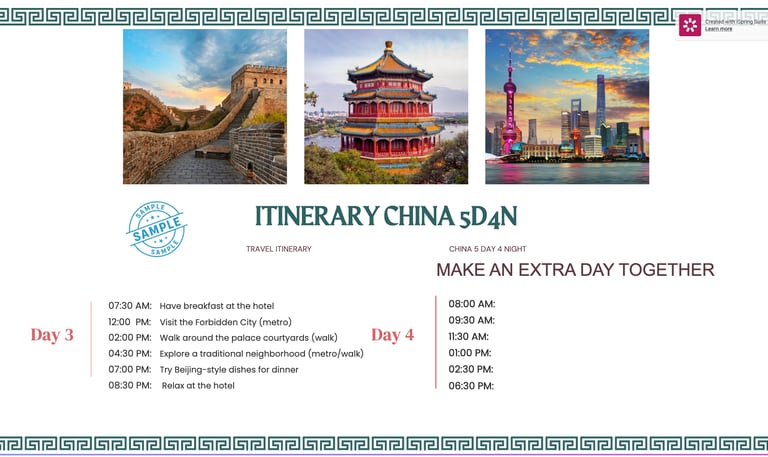
Beijing Model Itinerary
Before learners plan their own itinerary, a fully worked model shows times, activities, locations, and transport for each slot. A shared group task to complete an extra day gives learners supported practice with the format before working independently.
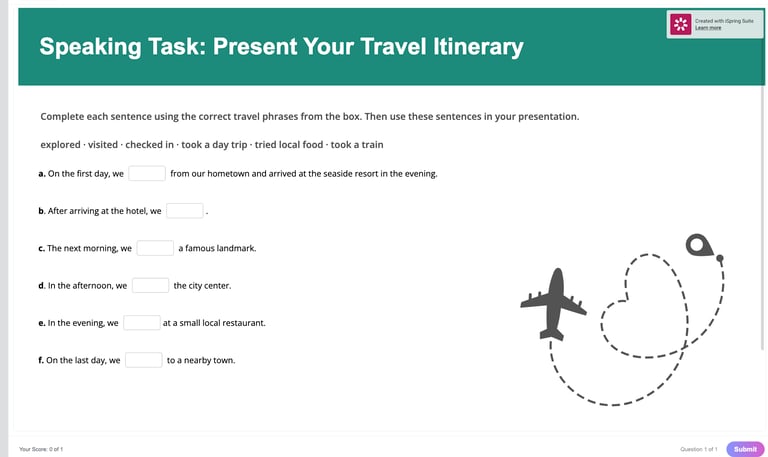
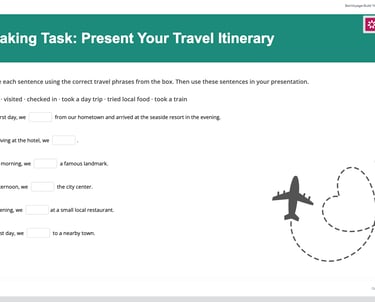
iSpring interactive activity
Interactive activities built in iSpring Suite 11 provide immediate feedback and allow learners to practise vocabulary and collocations at their own pace before moving to the production stage.
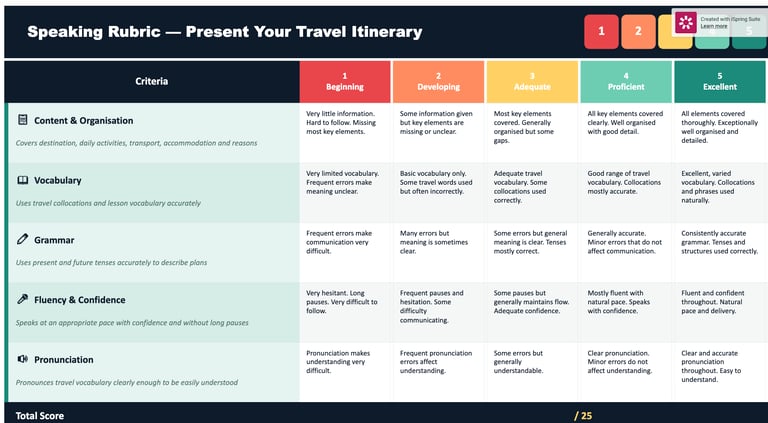
Speaking rubric
The final presentation is assessed using a five-criterion rubric covering content and organisation, vocabulary, grammar, fluency and confidence, and pronunciation — usable for both teacher assessment and learner self-reflection.